


Talk to us today about your Bars Requirements.
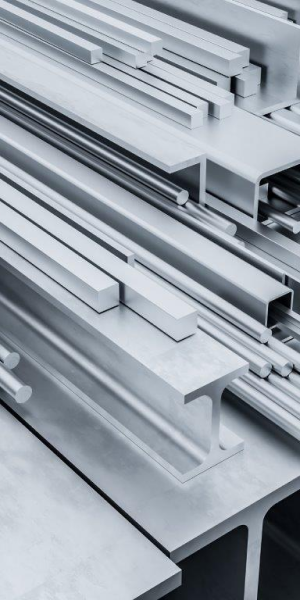
Bars
What Are Bars?
Nickel Alloy, Duplex, and stainless steel bars are renowned for their resilience in tough environments. These materials are specifically engineered to resist corrosion, perform well in high-stress conditions, and maintain integrity over extended periods. The material chosen for a project typically depends on the environmental conditions and the specific requirements of the application.
Manufacturing of Bars
The process starts with the selection of raw material, which is usually a billet or ingot, and heating it to a temperature suitable for shaping. It is rolled to the desired shape, round, square, or hexagonal form, in the case of rolling mills. When the bar reaches the right dimensions, it cools down and becomes stabilized. The bars are further submitted to forging, annealing, or pickling for some application-related processes to improve surface finish, and bring about desired mechanical properties, or corrosion resistance.
Applications of Bars
- Chemical Processing: Steel bar products are used in reactors, pipelines, and storage vessels for aggressive chemical handling.
- Oil and Gas Exploration and Offshore Rigs: Used in equipment parts such as valves, pumps, and machinery working in harsh environments offshore.
- Water Treatment: Used as key components in pipes, pumps, and filters, ensuring prolonged performance in water and waste treatment facilities.
Advantages of Bars
1. Resistance to Corrosion:
Steel bars, whether you go for stainless steel bars or carbon steel bars, have a high resistance to corrosion and thus are very effective in places where they are subjected to strong chemicals, water, or extreme temperatures.
2. High Strength:
The mechanical strength of the material ensures it does not crack due to pressure, heavy loads, or mechanical stress.
3. Durability:
The long-term reliability and structural integrity that these round bars provide, be it in construction or manufacturing processes, ensure less replacement.
Material Types of Bars
Duplex Steel Bar
Duplex steel is an alloy that has both the properties of austenitic and ferritic stainless steel. It provides better corrosion resistance in chloride-rich environments and is very useful for marine and petrochemical applications.
Nickel Alloy Bar
Nickel alloy bars are famous for their corrosion resistance in extreme environmental conditions, including acidic or alkaline mediums. They are most commonly used in the petrochemical, chemical processing, and marine industries.
Stainless Steel Bar
Stainless steel is one of the most flexible and widely used materials in all industrial applications. Corrosion resistance, excellent strength, and toughness make this material suitable for many industries.
Sizes and Specifications of Steel Bars
- Diameters: From 3mm to 160mm. This caters to small-scale as well as large-scale applications.
- Lengths: The length is available in 100mm to 3m, though custom lengths based on project specifications are also offered.
- Custom Sourcing: We can source and arrange delivery of sizes up to DN 1000mm within a short period of time to meet specific client requirements.
Quality up to International Standards
Quality is at the core of all we do. We source bars according to very stringent standards so that, on delivery to oil and gas, petrochemical, chemical processing, or marine engineering industries, they meet the minimum expectations of each.
- ASTM Standards: ASTM A182 and ASTM B564
- ANSI standards
Our Stock Range
- Carbon Steel (1018, 1045, 1060)
- Alloy Steel (4140, 4340, 8620)
- Stainless steel (304, 316, 410)
Bars Procurement from Hatco
Hatco specializes in supplying and distributing stainless steel, nickel alloy, and duplex steel bars for construction and other industrial applications. The materials are vital in many industries because of their resistance to corrosion, high strength, excellent toughness, and extreme temperature resistance. Our reputation as a global leader in the bar market is due to our quality, reliability, and customer satisfaction.